Introduction to Semantic SEO
SEO is no longer about placing a keyword into a page and expecting it to rank. Search engines such as Google have become far more advanced. They now focus on understanding meaning, intent, and context rather than simply matching words.
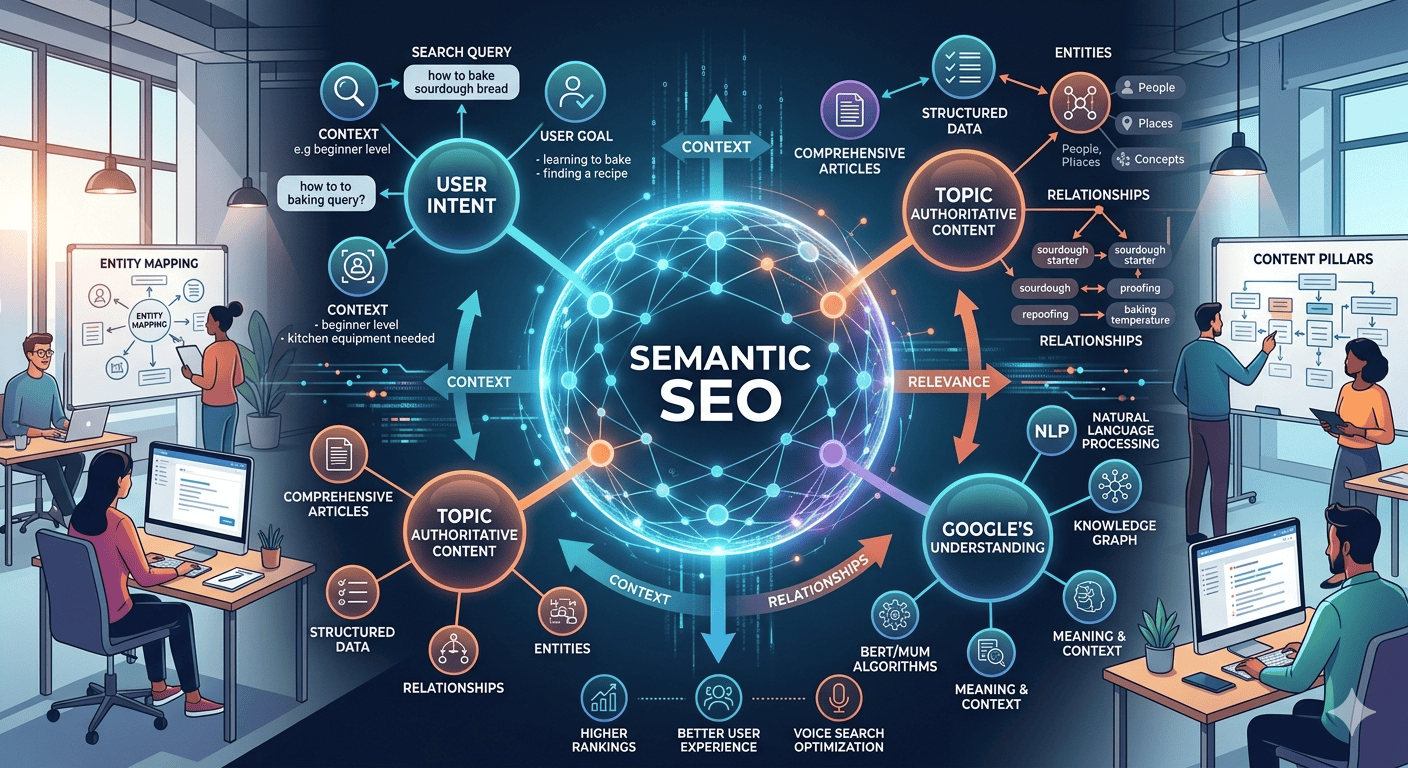
Semantic SEO is the process of structuring and optimising content so that search engines clearly understand what your page is about and how it connects to broader topics. Instead of targeting a single keyword, you build a complete topic around the user’s needs.
From real world SEO work, once semantic gaps are fixed properly, websites begin to show consistent growth. Rankings improve, traffic increases, and the overall quality of visitors becomes much better. This is not a short term trick. It is a long term system that works across industries.
What is Semantic SEO?
Semantic SEO is an approach that focuses on building content around complete topics rather than relying on individual keywords. It aims to understand what the user is actually searching for and deliver clear, relevant, and high quality information that genuinely answers their needs.
Instead of treating words in isolation, this method looks at context and the relationships between concepts. By doing so, it helps search engines interpret content more accurately, which leads to stronger rankings and a more meaningful experience for users.
How Search Engines Understand Content
Search engines use artificial intelligence and natural language processing to interpret content in a more human way.
Some of the key technologies include:
- Google Knowledge Graph
- Google BERT
- Google MUM
These systems allow search engines to:
- Recognise entities such as products, brands, and topics
- Understand relationships between concepts
- Match content with user intent instead of exact wording
For example, if someone searches for the best laptop for gaming, the search engine understands that the user is looking for performance, graphics capability, and comparisons. It is not just scanning for the phrase itself.
When content aligns with this level of understanding, it performs far better in search results.
Core Components of Semantic SEO
Entities
Entities are the building blocks of semantic SEO. These include things like brands, products, categories, and concepts.
Instead of focusing only on keywords, semantic SEO connects related entities to create a clear and structured topic. This helps search engines understand your content at a deeper level.
Search Intent Mapping
Every search has a purpose. If your content does not match that purpose, it will struggle to rank.
The main types of intent include:
- Informational, where users want to learn something
- Navigational, where users want to find a specific website
- Transactional, where users are ready to take action
- Commercial, where users are comparing options
When content aligns with intent, rankings become much more stable.
Topical Authority
Search engines prefer websites that demonstrate strong knowledge in a particular area.
To build authority, you should:
- Cover the main topic in detail
- Create supporting content around related areas
- Connect all pages through internal linking
When this is done correctly, websites often start ranking for a wide range of related searches without targeting each keyword individually.
Context and Relevance
Semantic SEO relies on natural and meaningful language.
Strong content includes:
- Related terms and phrases
- Variations of the main topic
- Supporting concepts
This creates depth and improves readability at the same time.
Keyword Research in Semantic SEO
Keyword research has evolved into topic research. Instead of focusing on one keyword, the goal is to understand the full landscape of a topic.
A modern approach includes:
- Identifying the main topic
- Finding related subtopics
- Analysing user questions
Useful sources include:
- Google suggestions
- People Also Ask sections
- Competitor analysis
This ensures your content reflects how real users search and think.
Content Optimisation for Semantic SEO
Content Depth and Coverage
High quality content should:
- Answer the main query clearly
- Address related questions
- Provide useful and practical information
Surface level content is no longer enough to compete.
Structured Content
Well organised content improves both user experience and search performance.
Best practices include:
- Clear headings for each section
- Logical flow of ideas
- Inclusion of frequently asked questions
Internal Linking Strategy
Internal linking plays a major role in semantic SEO.
It helps to:
- Connect related topics
- Guide users through the website
- Distribute authority across pages
In many cases, improving internal linking alone can lead to noticeable ranking gains.
Schema Markup
Schema markup provides additional context to search engines.
Common types include:
- FAQ schema
- Product schema
- Article schema
This increases the chances of appearing in enhanced search results.
Role of E-E-A-T in Semantic SEO
E-E-A-T stands for experience, expertise, authoritativeness, and trustworthiness.
Search engines aim to rank content that demonstrates real knowledge and credibility.
To improve these signals, you should:
- Provide accurate and well researched content
- Show real experience in the subject
- Maintain consistency and trust across your website
From practical experience, when these elements are implemented alongside semantic optimisation, websites tend to gain stronger rankings and maintain them over time. Clients consistently see improvement in both traffic and search visibility after these adjustments.
Technical SEO and Semantic SEO Connection
Semantic SEO depends heavily on a strong technical foundation.
Important areas include:
- Proper indexing and crawlability
- Fast loading pages
- Clean site structure
- Organised URLs
If technical issues exist, they can limit the impact of even the best content. Fixing these issues often unlocks growth that was previously held back.
Semantic SEO for Different Website Types
Different types of websites require different approaches.
For ecommerce websites:
- Build strong category pages
- Optimise product relationships
- Include detailed attributes
For service based websites:
- Create location specific pages
- Focus on service intent
For blogs:
- Use pillar content supported by related articles
- Connect content through internal links
Each approach supports deeper topic coverage.
AI Search and Semantic SEO
Search is moving towards artificial intelligence driven systems.
These systems rely on:
- Context
- Meaning
- Relationships between topics
Semantic SEO plays a key role because it helps search engines trust and interpret content correctly. Without strong semantic signals, content is less likely to appear in advanced search features and AI generated results.
Practical Framework
A simple approach to implementing semantic SEO:
- Choose a main topic
- Build related topic clusters
- Understand user intent
- Create detailed content
- Connect pages with internal links
- Apply schema where needed
- Strengthen trust and authority
- Monitor performance and improve
Common Mistakes to Avoid
Some of the most common issues include:
- Focusing only on keywords instead of topics
- Creating thin or incomplete content
- Ignoring internal linking
- Misunderstanding user intent
Avoiding these mistakes can significantly improve results.
Final Thoughts
Semantic SEO is now a core part of modern search.
Search engines are designed to understand meaning, not just words. Your content must reflect that shift.
When implemented correctly, semantic SEO builds a strong foundation for long term growth. It improves rankings, increases traffic, and creates a more reliable presence in search results.
.png)